Tai Chi Begins When You Move
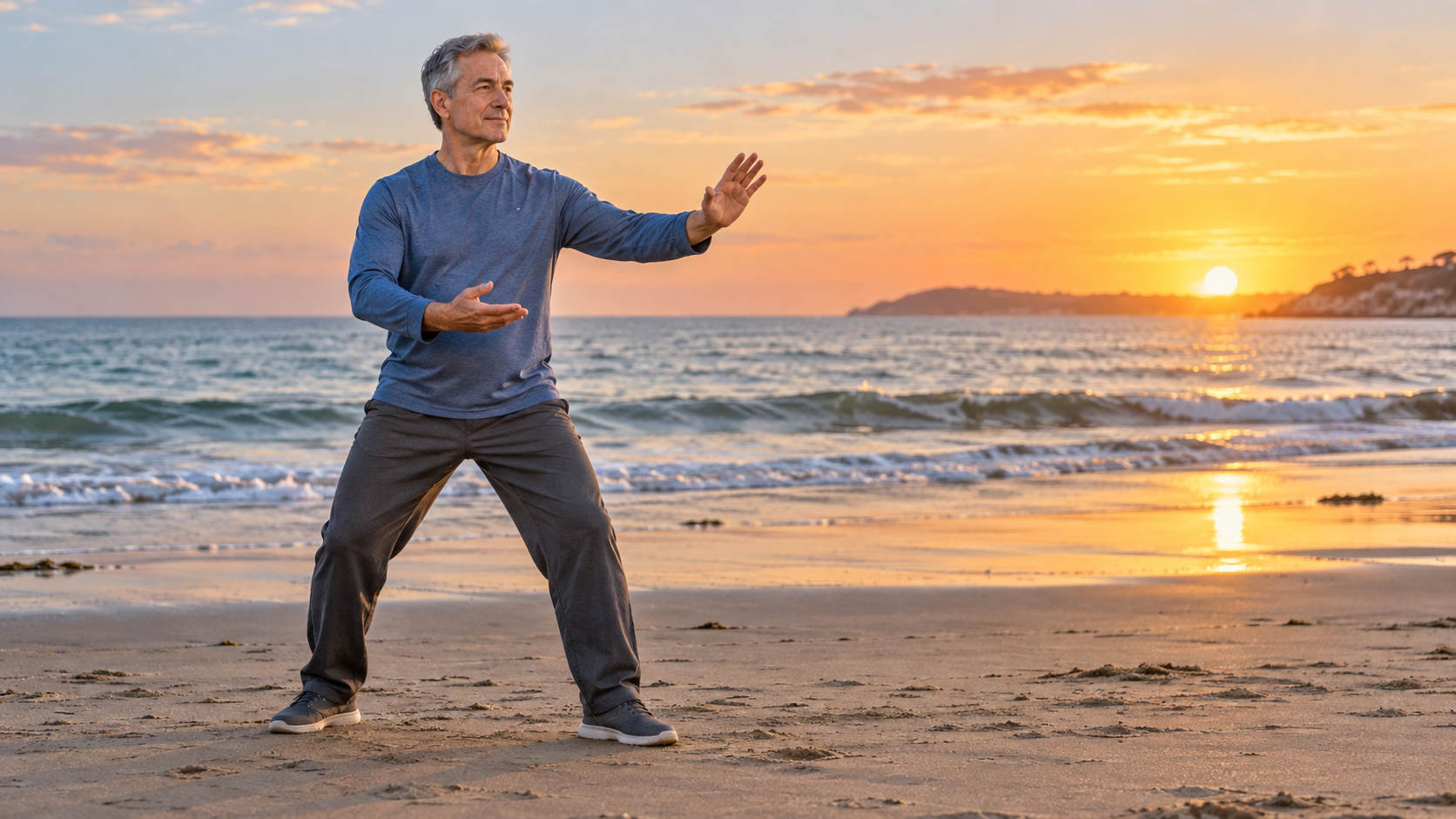
You're walking the shoreline of the coast when you encounter someone doing Tai Chi. Maybe you've always had an interest in the art, and you pause to watch him. His expression is serene. His frame is balanced. His movements look manageable. He is comfortable, but working up a sweat. He sees your interest, and invites you to join him -- those who practice Tai Chi love to share it! Then you try following along, and you stumble -- your hands seem to have missed the instructions your feet received. Woops!
That awkward first attempt is a perfectly normal.
Tai Chi is an art you learn through doing. Watching a demonstration or imagining yourself in a posture can help you understand it, but practicing Tai Chi gives you something different: the experience of finding your footing, adjusting your arms, and noticing where you’re holding tension.
You don’t need to know specific postures or a whole form to start learning.
Imagine setting aside a few minutes after putting away the laundry. You practice one movement your instructor has shown you -- perhaps a transitional step, mindfully moving weight from one leg to another. The first time, you concentrate on where your hands go. On the next attempt, you notice you’ve tightened your jaw. You soften it and try again.
Although your movements may look almost the same to someone across the room, your experience of it has changed.
One useful image in Tai Chi is to move as though the air around you were water. Picture your hand traveling slowly through a swimming pool, with a gentle sense of resistance throughout the movement.
The air doesn’t actually provide water’s resistance. Imagining it encourages steady, deliberate motion. There’s no need to stiffen your muscles or push hard against an imaginary force. Your muscles are already working to support your posture and guide your body as you move.
Practicing Tai Chi asks for your attention. Where is your weight? Can your shoulders soften? Are you breathing comfortably, or holding your breath while trying to remember the next step?
This is part of what teachers mean when they describe Tai Chi as both an external and an internal art. The visible movements work together with attention, intention, and breathing. Traditional teaching also uses the word qi, often translated as “vital energy.” You can explore that traditional language while keeping your practice grounded in sensations you can notice for yourself.
The National Center for Complementary and Integrative Health describes Tai Chi as combining gentle movement, breathing, and a meditative state of mind. Research suggests it may support balance in older adults, though benefits develop through ongoing practice.
Patience belongs in that process. Some days, remembering a movement will take all your attention where as on others, the same movement may feel more familiar. A missed practice or a distracted afternoon doesn’t erase what you’ve learned.
Choose a starting routine that fits your day then build gradually with guidance. If you have significant pain, a recent injury, or serious balance difficulties, ask a qualified healthcare professional about appropriate adjustments.
Contact Serenity Yoga & Tai Chi LLC to learn how personalized online lessons might help you begin with movements suited to your comfort and experience.