How Is Tai Chi Different from Walking?
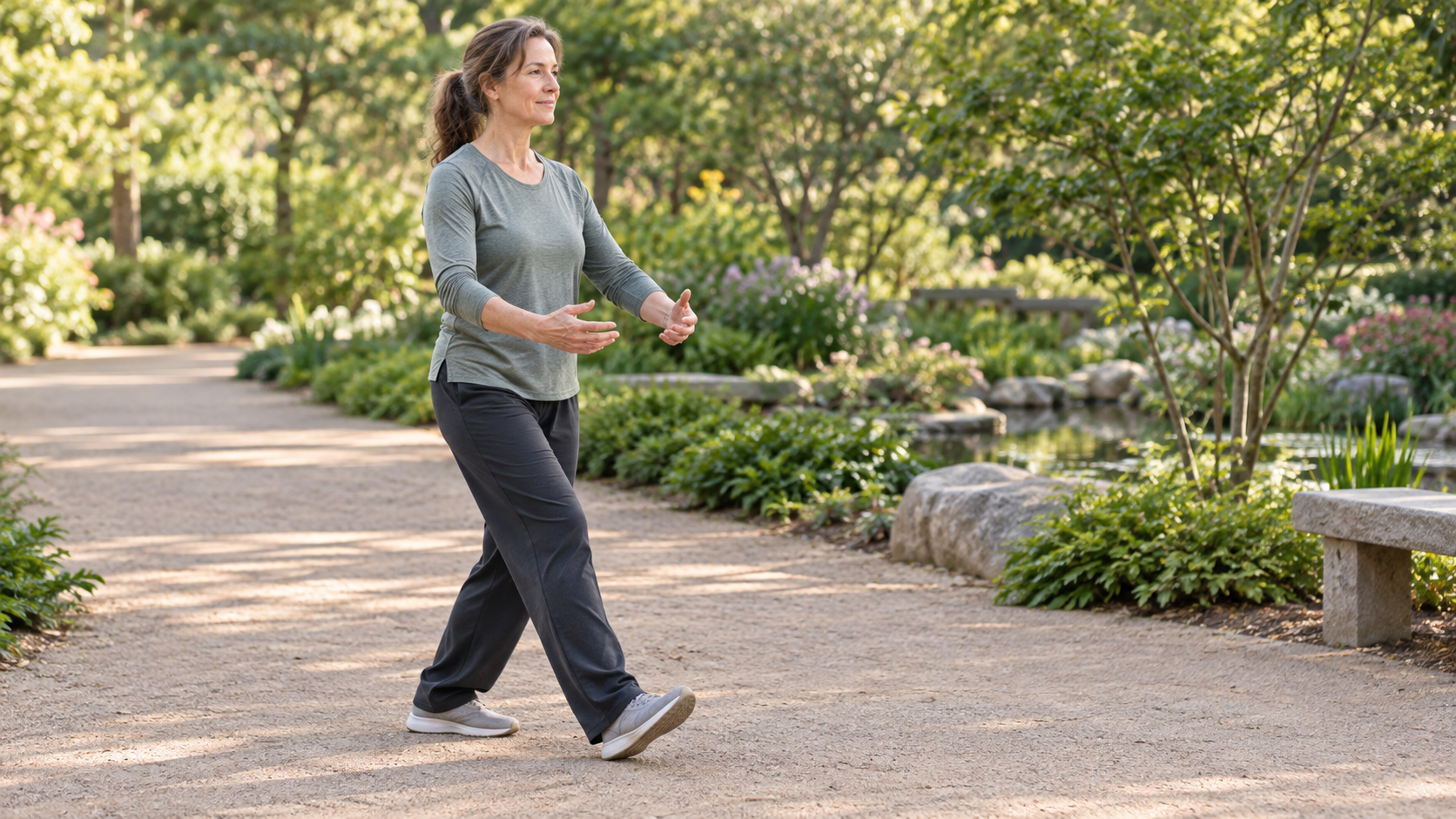
You grab your walking shoes by the door. You've a familiar route, perhaps a few blocks through the neighborhood, and you usually feel better when you return. Then, when your walking buddy suggests Tai Chi, you wonder what it would add to something you already enjoy.
What's the difference between Tai Chi and Walking? It’s a fair question. Walking is a valuable habit. Tai Chi, however, offers another way to practice movement, with more deliberate attention to how you shift your weight, turn, and coordinate your body.
On a walk, your steps often find their own rhythm. You might chat with a friend or notice which gardens are flowering. In Tai Chi, you spend more time paying attention to the movement itself: how your weight reaches one foot, how your body turns, how your arms follow, and how you're breathing.
Imagine your walk. As you turn a corner, you notice that your shoulders move before your hips. You slow down to make the turn smaller. You're conscious of your weight shifting between your legs, the pressure on your knees, and you're mindful to step first with your heel to plant the sole of your foot and root it into the ground, stabilizing you. Remembering the order asks for concentration, but navigating the turn feels more connected, intentional, and noticing a clenched hand or raised shoulder gives you a chance to release unnecessary tension. That kind of exploration gives Tai Chi its particular character.
Walking also involves coordination and attention, especially on changing terrain, but Tai Chi gives you a structured opportunity to study those skills slowly. Both can have a place in your week.
The physical demands differ, too. Brisk walking is a familiar way to build aerobic fitness — the ability of your heart and lungs to support sustained activity. Tai Chi’s demands vary with the style, pace, and length of practice. Its controlled movements can offer opportunities to work on balance and comfortable range of motion. The National Institute on Aging recommends a mix of activities and notes that Tai Chi can combine several types of physical exercise.
You may also hear claims about how Tai Chi promotes sharper thinking or stronger immunity. Studies of Tai Chi and qigong have found changes in some immune measures, but that doesn’t mean practicing will keep you from getting sick. A research review describes those findings and their limitations.
Still, for everyday practice, there’s a simpler focus: becoming familiar with how you move.
Learning builds gradually. At first, you may concentrate on your feet. Later, you might coordinate your hands more comfortably or remember a sequence with fewer pauses. Progress will vary from day to day.
A clear, level space at home can make practice convenient. Movements can be adapted and even practiced from seated positions. If pain, recent injury, or significant balance difficulties affect your activity, ask a qualified healthcare professional about suitable adjustments.
Contact Serenity Yoga & Tai Chi LLC to learn how personalized online lessons might fit alongside your walking routine.