A Little Room at Home Is Enough for Tai Chi
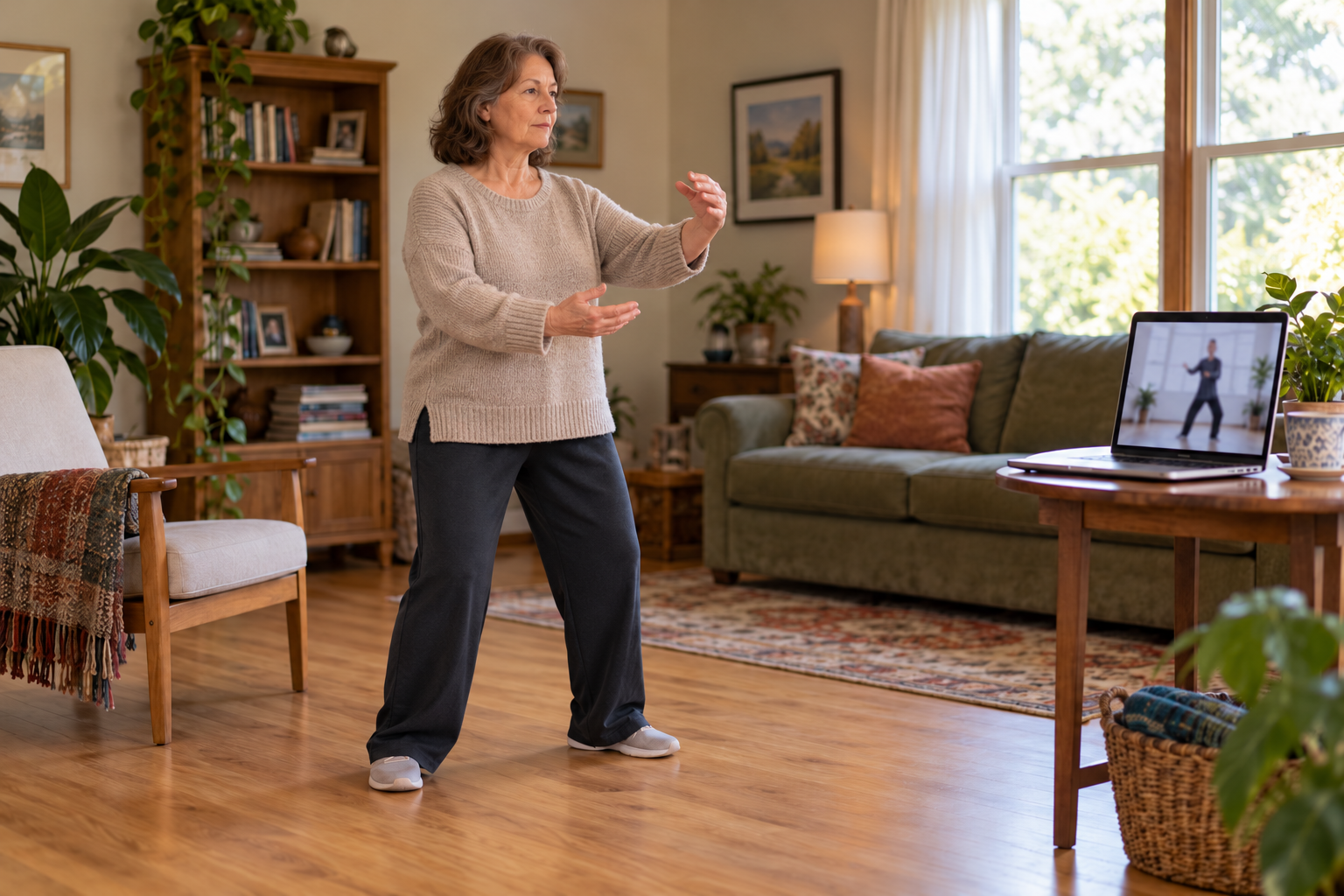
The laundry's folded, your coffee's gone cold, and you’ve been sitting longer than you meant to. When you stand, you take a moment before moving. You’d like to bring more movement into your day, but getting ready and driving to a class feels like another task on an already full list.
You don't need to make prioritizing movement a daily chore. Tai Chi can fit into the day you actually have. You can practice at home, in comfortable clothes, with enough clear space to move your arms and take a small step.
That makes it worth considering if you’re returning to movement after a break, or simply want something you can keep doing.
Tai Chi involves slow, deliberate movements, attention to your posture, and comfortable breathing. Depending on the lesson, you might gently turn your upper body, move your hands through an easy arc, or gradually shift your weight between your feet. You learn to notice where your feet meet the floor and how your body moves above them. It's easy to do, and the movements offer a range of positive health benefits.
Imagine setting up an online lesson beside your living-room window. You move a loose rug out of the way, put the laptop screen where you can see it without twisting, and leave a sturdy chair nearby. The instructor demonstrates a movement. You watch first, then try a smaller version. Your shoulders rise as you concentrate. You notice, let them soften, and try again. When the form or posture gets confusing, you pause.
Really, that’s a useful beginning. There’s no need to get through every movement on the first day.
Online lessons for Tai Chi offers a practical way to participate when travel, weather, or a busy schedule makes attending in person difficult. Recorded lessons let you repeat a demonstration. Live classes may offer opportunities to ask questions and receive guidance, depending on how they’re arranged. Look for beginner instruction that explains foot placement clearly and offers adjustments, including seated options when appropriate.
Home practice also gives you room to learn without worrying about keeping pace with the person beside you.
Over time, regular Tai Chi practice may support balance and everyday movement. The National Center for Complementary and Integrative Health reports evidence of benefits for balance in older adults. Progress varies, but it takes commitment and practice.
The attention you give to a slow weight shift can help you notice how you stand before reaching for a grocery bag or turning toward someone calling your name. Some people also find that concentrating on a gentle sequence gives them a welcome pause after a tense day.
Choose a level, uncluttered spot with secure footing. Keep movements within a comfortable range, and stop if you feel pain or dizziness. If you have a recent injury, serious balance difficulties, significant pain, or medical restrictions, ask a qualified healthcare professional about suitable modifications before beginning.
Make a little room in your day. Online lessons can grow from there.
R